It's Bollywood's Fault: How Indian Cinema Makes Women Look Like Emotional Fools and Poor Decision-Makers

Updated: Jul 4
We often read stuff about Indians' obsession with having male children, and reasons why it is so. They tell us about ongoing cruelty happening around the world against women and girls, such as assaults, dowries, concerns about their safety, and all kinds of financial burdens they think girl children bring, considering them as the weaker sex.
But they fail to see why this very mentality keeps on reinforcing decade after decade, despite making laws about sex determination and termination of pregnancy. When the Indian government criminalised abortion of female foetuses, people shifted to having multiple girls until they have a son. The recent case of a couple from Haryana, India, has received immense media attention for finally having a son after 10 girls in a row. Guess what, termination has reduced significantly, but people still desire at least one male child, proving the mindset rooted in patriarchy. And we still don't understand why.
So, a mahapurush once said that it's Bollywood's fault that people still see girl children as burdens and emotional beings who need direction in life. I argued against this only to agree with what he said because the logic was too true to ignore. Let's start with examples from popular Bollywood narrative demonstrating that girls are emotional, fall in love very easily despite chasing rational objectives, make decisions to leave their parents or guys they are already dating (or married to) once they meet a guy who is most likely a red-flag to begin with.
The following are some of the movies I want to highlight, showcasing how Indian cinema portrays women as emotional fools who make irrational decisions out of sentiment, which is a broader issue at large.
Why It's Bollywood's Fault in How Indian Cinema Represents Women
I Hate Luv Storys
What is this obsession with chasing uninterested people? A woman cannot and should not try to fix a broken or disinterested man. People don't magically start liking the idea of true love one fine morning. Some are just for hookups, so they stay there until old age. If they are not your clan, just move away.

This is exactly what happens in this film. Simran (Sonam Kapoor) had a dreamy Bollywood life - a perfect job as an art director in films, and a fiancé, Raj (Sameer Dattani). Then enters Jay (Imraan Khan), who also works as an assistant to a director of films revolving around love stories, but Jay never really believes in one. Simran and Jay become close friends, and then she starts to develop feelings for Jay. Jay refuses because he never saw her in that light, but only as his good friend. He eventually does, like a typical Bollywood script!
Now the question is, why was she in love with Jay when she was already about to get married to Mr. Perfect, Raj? Is it because available people lose value over time, and we tend to value only those who are unavailable? By this logic, every time we try to connect with fellow humans, we will keep getting attached forever, and maybe true love shouldn't exist. This is a classic example of a girl being poor decision-maker.
Bachana ae haseeno
Raj Sharma (Ranbir Kapoor), a software designer in Sydney, falls in love with Gayatri (Deepika Padukone), who rejects his proposal. He then reflects on his own behavior when he rejected two other women at a younger age. So, the flashback unfolds.
First, when he was a freshly graduated high school student in 1995, he encountered Mahi (Minissha Lamba), who believed in DDLJ-style love stories, in Switzerland. He actively pursued her, created gestures like writing a poem and shared a kiss, regarding which he also boasted about to his friends how easy this girl was, and that the poem wasn’t written by him, but she fell for it anyway. She eavesdropped and left heartbroken.

He met another girl, Radhika (Bipasha Basu), in 2002 in Mumbai when he had a job as a game developer. She was an aspiring model who lived with him and eventually got serious. He abandoned her outside the registrar’s office, where they decided to marry each other.
This self-reflection teaches him to take accountability and ask for forgiveness from these women because this is when he finally realised how painful it is to fall for someone only to get rejected at the end. He travels to those places where Mahi and Radhika lived to pardon him.
Mahi is a married woman now who has two kids. She performs duties, but love is something she no longer believes in. Radhika is a highly successful model who hires Raj as her assistant only to humiliate him to satisfy her ego. Both women eventually forgive him. (Why?)
Upon returning to Sydney, where he met Gayatri, was when it got cliché. She felt guilty and asked for forgiveness from him. He forgives, and they got together. The question is, why did Gayatri feel guilty? Just because she was a woman? Can't women reject people and not feel guilty about it? I find more people taking selfish decisions for materialistic desires or whatever, but guilt is something that is never in their vocabulary. This is regardless of gender.
Even though they were all fictional characters, hypothetically speaking, Radhika became successful because she was abandoned outside the marriage registrar’s office. She channelised that anger into being productive in her career. Had she married at that early age, she wouldn’t have that career. I have explained such cause and effects in The Butterfly Effect blog.
Ladies vs Ricky Behl
This movie begins with a spoiled brat, Delhi-based wealthy girl, Dimple Chaddha (Parineeti Chopra), who falls for her gym trainer, Sunny Singh (Ranveer Singh). Once she gets serious and decides to marry him, he narrates to her a story that his property is occupied by his tenants, and some other inheritance-related disputes. Hence, she lends him 20 lakh, intending to use his father’s influence so that the tenants are evicted. But she finds out the tenants are the real owners, and the inheritance issue is non-existent. Then he evades without a clue, making her regret her decision to trust him. Tell me more about bad decision-making!
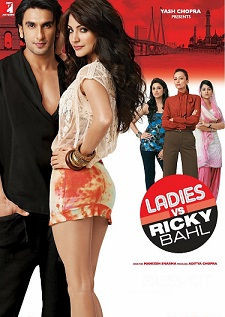
Another businesswoman from Mumbai, Raina Parulekar (Dipannita Sharma), is later ditched by the same man with a different name - Deven Shah - who claims to run an art gallery, and she purchases an expensive painting from him, only to realise that the painting was fake. Deven disappears after taking 60 lakhs, and she shares her story publicly, to which Dimple notices and contacts her. Through talking, they concluded that it was the same man under different names. They are both later joined by Saira Rashid (Aditi Sharma), who was also conned of 10 lakhs by a man named Iqbal Khan, to whom she was romantically interested, but was deceived instead.
Together, they plot a plan to catch that guy using a saleswoman, Ishika Desai (Anushka Sharma). Initially, they successfully conned him by projecting Ishika as a wealthy woman, slowly recouping the money he initially stole through manipulation. But he eventually catches that. Additionally, as typically Bollywood does, he and Ishika genuinely develop feelings for each other after interacting for some days. He asks for forgiveness, telling her that his real name is Ricki Behl, and agrees to return the total sum of money to everyone.
The question that arises here is about Ishika's feelings. When she was literally hired to con him, why did she begin to love him, and that too within days? People like Ricky survive through deception, and no amount of emotion changes their core personality. Their so-called feelings are momentary impulses, if developed at all.
Rockstar
Janardan Jakhar (Ranbir Kapoor), a.k.a. JJ, a.k.a Jordan, is a boy from Delhi studying at Hindu college who dreams of becoming a rockstar and gets laughed at often by his friends. Khatana, a canteen owner, once says to him that JJ needs to undergo a massive life-altering heartbreak to reach that threshold, which is what popular artists go through.
Once he watches a dance performance of a girl from St. Stephen’s college, Heer Kaul (Nargis Fakhri), he decides to propose to her, but gets humiliation in return. Remembering Khatana’s words, he sees this opportunity as a perfect recipe of enduring this heartbreak to achieve stardom. Despite earlier humiliation, they spend time together by engaging in adventurous, risky behaviour, but never get married. Heer gets married to someone else and settles in Prague.

Meanwhile, Jordan is thrown out of his house by his brothers alleging that he stole the family’s money. He then takes refuge at a dargah, earns a handful by singing there, and gets eventually noticed by Ustaad Jameel Khan, a renowned classical musician. Jordan is then offered a playback singing job by Ustaad for his album. He is also offered to do touring at Prague, where Heer lives, so he agrees in hopes of meeting her.
Heer, at this point, is suffering from continuous health problems, but they both reconnect and get intimate despite her being married. Her husband files a complaint against JJ for trespassing, and JJ is put behind bars for a while. Upon returning to India, JJ learns that Heer is pregnant with his child, so he ignores all his obligations to music and goes straight to Heer, who eventually dies. His album gets a massive hit, but he turns into an arrogant, spoiled brat who misbehaves with the media and fans.
Anyway, why did Heer and Jordan never get married despite spending so much time together? Why did they get intimate when she was married to someone else? Isn't that emotional foolishness? This is not love, but attachment or obsession.
Kal Ho Na Ho
This film was released when I was a teenager. I loved it back then because the character Naina’s irritability felt relatable, followed by the gradual transformation that seemed soothing to see, since I had imagined myself too transforming into someone more significant. I also have fond memories associated with it while watching it in a theatre. Looking back then, it now sounds like I got swayed away by the romance and sentimental essence they portrayed. Given the age, everything felt cinematic even in day-to-day’s mundane tasks, ignoring the logic due to an underdeveloped brain.
The story was - Naina Catherine Kapur (Preity Zinta) is a pessimistic, uptight American student of Indian descent who lives in New York City with her family, containing four more members - her widowed mother (Jaya Bachchan), grandmother (Sushma Seth), a brother (Shiv Kapur), and a half-sister (Jhanak Shukla). Apart from that, she also has two best friends - Rohit Patel (Saif Ali Khan), who also studies in the same batch in college, and Jaspreet "Sweetu" Kapoor (Delnaaz Irani) - both of whom are Indian Americans as well. Her family doesn't get along well with each other that makes her feeling annoyed pretty much all the time.

Then enters Aman Mathur (Shah Rukh Khan) in their neighbourhood, who brings smiles to everyone's faces like a messiah. He opens a communication channel among Naina's family members to settle the ongoing conflicts.
Naina slowly starts smiling and begins to love Aman. But the plotline brings in a love triangle. This is because both Rohit and Aman start developing feelings for Naina, but Aman doesn't disclose his love for her due to a heart-related illness and lower life expectancy. So, when she confesses her feelings to Aman, he lies about his marital status. Heartbroken Naina returns to being gloomy.
But here is the twist, since Aman is 'married' in their knowledge, he convinces Rohit to make a plan together to 'persuade the girl within 6 days'. She eventually says yes to Rohit's proposal and saves the date for marriage. During the ongoing marriage event, Aman suddenly collapses, and the rest of the world finally learns that he doesn't have much of life left and lied that he was married because of his heart issues. The emotional drama unfolds, leading to Aman's death, and the movie ends with the couple, who are old now, narrating their story to their grown-up daughter.
The formula for setting a girl within 6 days is lame. In real life, she wouldn’t have fallen for Rohit, and even if she did, it would have taken time, else it would be known as a rebound. Imagine a girl who loves a boy who died. Would she suddenly direct her feelings to her best friend? Practically, it is not that easy. People move on with their own pace, but films like these often showcase the simplification of complicated human minds so effortlessly.
Even in movies like Baazigar and Soldier, one may notice similar patterns. The girls are daughters of rich dads, endure all the luxury for life and then dump them for men they barely know, who are killers as well. For instance, in Baazigar, Ajay Sharma (Shah Rukh Khan) kills Priya’s (Kajol) sister, Seema (Shilpa Shetty), who was literally innocent. Ajay’s vengeance sounded weak because two of his family members weren’t murdered, but it was circumstantial/illnesses that they died. His avenging to even the past, and that too through a naïve girl, showed the tendency of a habitual criminal. In Soldier, revenge was present too, but Preeti (Preity Zinta) wasn’t supposed to suddenly leave her dad because an acquaintance, Vicky (Bobby Deol), told her that her father was involved in framing Vicky’s father for treason. Most daughters wouldn’t believe it in the first place, even if their dad is guilty.
One may argue that these are just movies and mean nothing. In my defense, I'd like to ask them if there is no impact whatsoever, then why do they also produce on social causes such as widow remarriage (Babul), girls wrestle too (Dangal), avoid putting pressure on aspiring students (3 Idiots), and similar kinds?
Filmmakers who simply have commercial agenda don’t care about what impact they are imposing on people, but rather focus on what the public wants to watch. It grants them commercial success. If there is a specific outlook that needs to change, the makers should avoid reinforcing the already existing beliefs. I believe businesses should also have ethics.
There are great examples of female-centric experiments, too, like the movie Queen which was surprisingly a hit in the industry. It is about a girl whose fiancé doesn’t show up on their wedding aisle, whose honeymoon tickets are already booked, so she goes to those places as a solo traveller, rediscovers her true self, makes friends, and dumps him when he returns back demanding forgiveness. She is no longer that co-dependent, timid girl anymore. Such cases happen in real life, and more and more movies need to portray that.
It is not like incidences like infidelity or a girl marrying a cab driver doesn't occur at all. But the repeated representation brainwashes the audience who have been consuming such kinds of contents. How many cases have you personally encountered in your neighbourhood where every other girl is running away with a poor or homeless man? It's not that prominent!
In conclusion, if the audience gives less weightage to films like the ones listed, and even those that go to extreme lengths like Kabir Singh and Animal, and more to something like Queen, Mardaani, No One Killed Jessica, etc. the commercial production house with a key objective to bring in more (misogynic) audience, will cease to exist. As for the worldview on how to actively avoid and tackle sexism and the related effects, I have discussed more about that in my other blog, Breaking the Silence.
Frequently Asked Questions (FAQs)
What are the most common stereotypes of women in Indian cinema?
Indian cinema loves to portray women as highly emotional beings whose natural tendency is to love, care, nurture, and forgive. They are also seen as someone who needs guidance on life’s matters, who is easy to fall in love with men who are classic red flags as their romantic interest upon meeting within days.
Does Bollywood promote unrealistic relationship expectations?
Bollywood movies romanticise the idea of men involved in criminal activities, violence, and polygamy, and despite all that, their love interest will always forgive them. For instance, in the movie Animal, Ranbir Kapoor’s character was that of a married man and yet he had a one-night stand with a woman. Despite knowing this, his wife doesn’t leave him.
If the roles were reversed based on gender, all hell would’ve broken loose. Such films with role-reversal have also been released, but the public’s negative reaction is usually very strong. For instance, in the movie Haseen Dilruba, Taapsee Pannu’s character is shown as the cheating wife; her character in real life was questioned despite it being a fictional role done by her. Infidelity isn’t something to be celebrated, but shaming women and not holding men accountable is sexism.
How does Indian cinema influence gender roles?
Indian cinema has been around since 1913, and is widely watched by a large audience. If they have a particular type of mindset, films continue to reflect and reinforce the same. Such films are loved because so many people agree with what is being portrayed. And time and again, they didn’t change much except the graphics, budget, locations, songs, and several aesthetics.
For example, the movie Vivah, which was released in 2006, was a hit because it shows a stereotypical, highly sacrificing Poonam (Amrita Rao) who agrees to have an arrange marriage at a tender age of 20. She doesn’t have a job or a career. The one with whom she is supposed to marry (Shahid Kapoor) already has a family business in which she could also be part of, but such conversations never happen. It effortlessly portrays a sober girl who does the housework, is tolerant of the BS and toxic behavior of her aunt.
What are the psychological effects of unrealistic romantic portrayals in movies?
If movies repeatedly show that stalking a girl is love, then young boys and men in everyday life register that as a way to make her fall in love with them, which is not true. In real life, we often hear news about acid attacks after the girl refuses to marry the guy who proposes to her because he thinks that his behavior is romantic. Stalking, in a practical sense, is an obsession that may also lead to sexual harassment or some form of violence. This has nothing to do with love but rather threatens the safety of a girl or a woman.
Why are independent women often misunderstood in Indian films?
Women who are shown as career-oriented, having opinions in films, are most often judged as vamps. They present that by controlling the tone and pitch of their voice, the way they dress, and their societal and professional positions, showcasing as someone leading or influencing people under them. These women somehow hate the lead heroine, who is the epitome of sacrifices.
For instance, in the movie Yaadein, Kiran Rathod’s character was that of a daughter of a businessman who has strong opinions on how to maintain her upcoming marriage with Hrithik Roshan and when to have children. She was giving an impression of someone who is against Indian culture.


Comments